 Desktop + mobile review
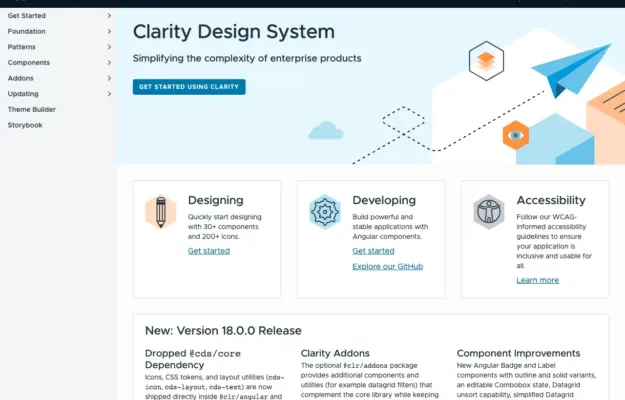
Role-based entry points help a shared design system serve designers and engineers without forcing everyone through the same introduction.
The reference or directory collection
Directory and reference websites that organize vast information into browsable, searchable collections.
These designs tackle the challenge of presenting large datasets with intuitive filtering, clear categorization, and user-friendly navigation. From business directories to resource libraries, each site demonstrates how structured design makes complex information accessible, discoverable, and useful for visitors seeking specific content.
Desktop + mobile reviewRole-based entry points help a shared design system serve designers and engineers without forcing everyone through the same introduction.
 Desktop + mobile review
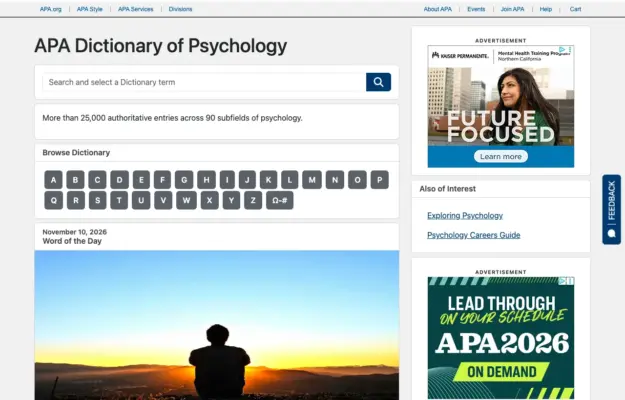
A reference site benefits from a direct search route and a predictable browse route for visitors who do not know the exact term.
 Desktop + mobile review
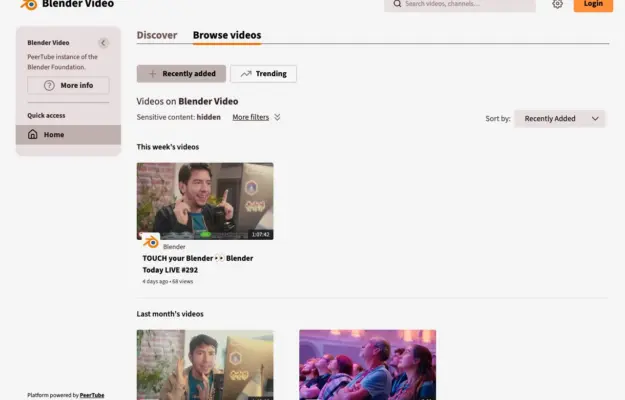
Consistent thumbnail ratios and clear date groups make a growing video archive easier to scan; keep the title and duration outside hover-only interactions.
 Desktop + mobile review
For a visual directory, let people preview the actual material and keep sort, search and filter functions distinct.
 Desktop + mobile review
A component library does not need an elaborate hero when its purpose and documentation routes are already clear.
 Desktop + mobile review
Separate site navigation from the current page outline so readers can tell whether a link changes section or moves within the article.
 Desktop + mobile review
Keep browsing controls beside the content they affect and use consistent cards to make a varied directory comparable.
 Desktop + mobile review
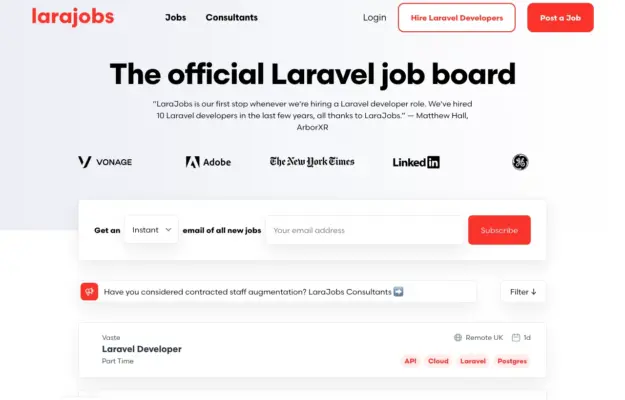
A two-sided marketplace needs recognizable routes for each audience; do not make candidates decipher an employer-focused call to action.
 Desktop + mobile review
Show the kind of work a community contains next to a clear description of who it is for.
 Desktop + mobile review
Group a deep content archive into recognizable topic clusters before adding decorative effects.
 Desktop + mobile review
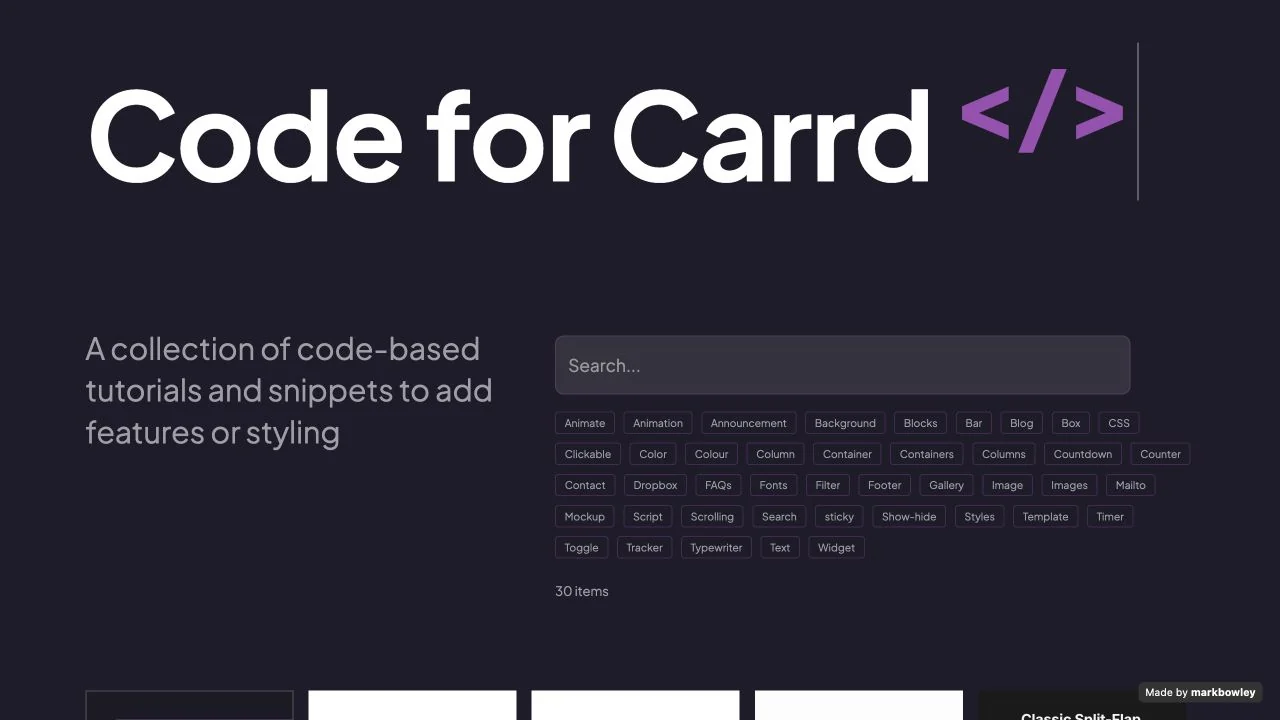
A large white-and-purple headline, slim announcement bar and matching topic strip frame a Carrd resource directory.
 Desktop + mobile review
A large white-and-purple title introduces a dark resource catalogue, with search and compact topic tags beside a short explanation.